The Analog Paneer Truth Nobody's Talking About
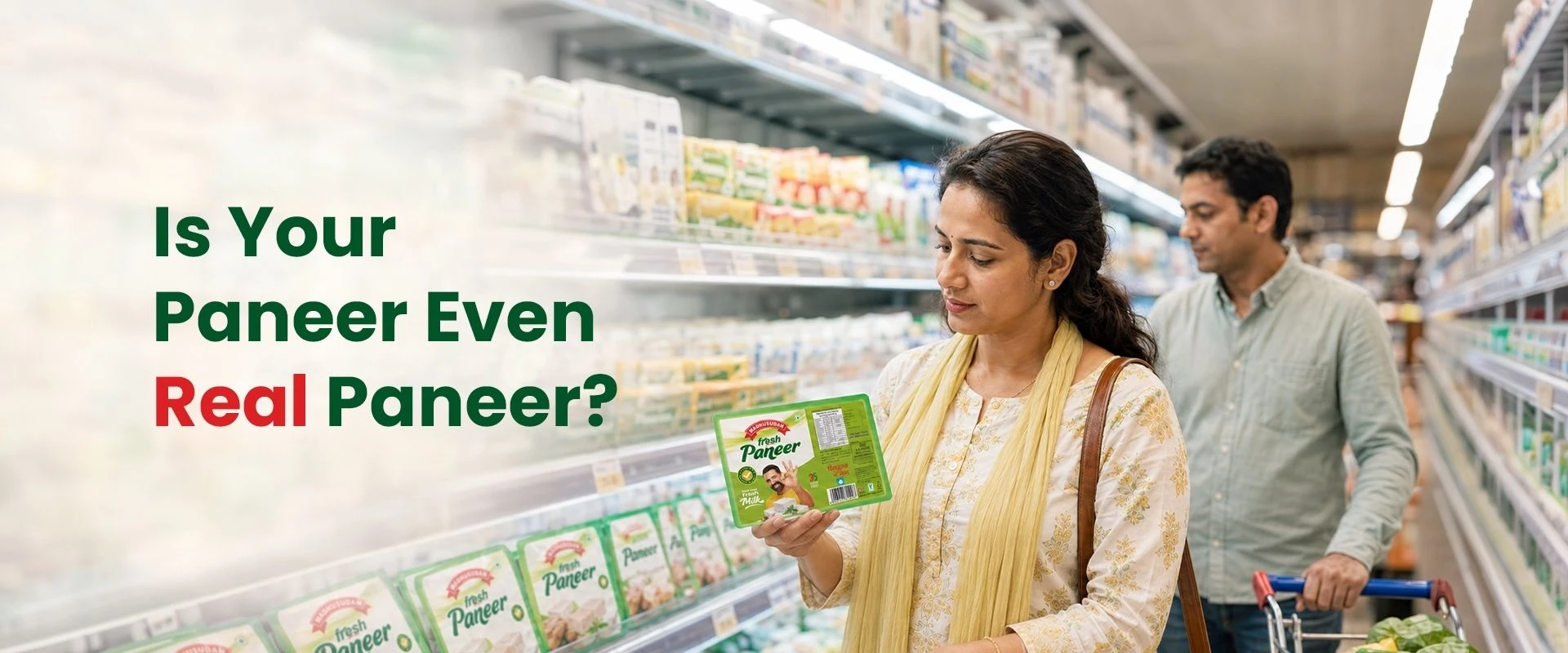
You bought paneer, you cooked it, ate it, maybe fed it to your kids. But here's an uncomfortable question- did you actually eat paneer, or did you eat something wearing its costume?
Walk into most local markets today and there's a good chance the soft, white block you picked up isn't paneer at all. It is something the industry quietly calls “analog paneer” and once you know what it actually is, you will never look at that innocent looking slab the same way again.
Let's break this down without the jargon.
What Exactly Is Analog Paneer?
Real paneer has one job description: Milk, Acidifying agent (lemon juice, vinegar, or citric acid), Heat and Patience. That's it! That's the whole recipe which is fed to Indian households for generations.
Analog paneer, on the other hand, is a manufactured stand-in. Instead of milk fat, it's often built using vegetable oil (frequently palm oil), starch, skimmed milk powder, and a cocktail of stabilizers and emulsifiers designed to mimic the texture of real paneer. The stretch, the bite, the colour without actually being dairy.
Why does it exist? Because it's cheaper to produce, has a longer shelf life, and to the untrained eye on a shop shelf, it looks identical to the real thing. That's precisely what makes it risky, you genuinely cannot tell the difference just by looking.

Why This Should Actually Worry You?
This isn't about being a purist for the sake of it. There are real, tangible reasons analog paneer deserves your attention:
● It skips the nutrition you are paying for:
People buy paneer specifically for protein and calcium. Analog versions, built largely on starch and vegetable fat, often fall dramatically short on both which means you are paying dairy prices for a product that behaves more like processed filler.
● The oils used raise genuine health concerns:
Repeated high-volume use of certain vegetable oils in food manufacturing has been linked by health researchers to poorer cardiovascular outcomes over time, especially when consumed regularly as a healthy protein substitute.
● It's frequently unlabelled or mislabelled:
Most consumers assume the paneer in front of them is dairy-based because nothing on the packaging (or the loose slab at the sabzi mandi) tells them otherwise.
● Simple tests can expose it, but almost nobody runs them:
A drop of iodine solution on real paneer won't do much; on starch-heavy analog paneer, it can turn a visible blue-black, revealing the starch content. Most kitchens simply don't carry out this check before cooking.
● Put simply:
You might be feeding your family a starch-and-oil product while believing you're giving them protein and calcium. That gap between belief and reality is where the real harm sits.
So What Should You Actually Look For?
Here's the answer — you need a paneer that's transparent about what is inside it, made by people who have nothing to hide about the process, and backed by proper food safety accountability rather than a vague promise on a wrapper. This is exactly the space Madhusudan Paneer was built for.
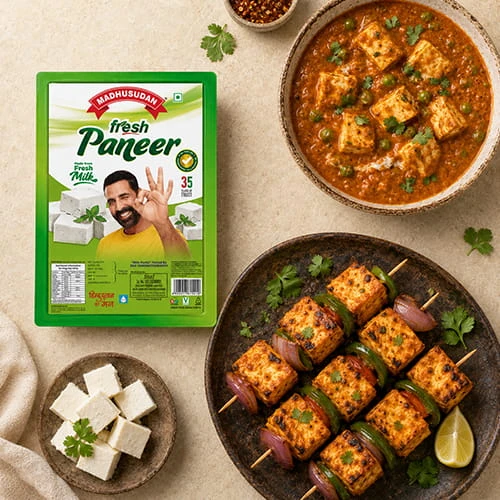
Madhusudan Paneer is made the way pure paneer is made: from real milk, set the traditional way, with nothing added to fake the texture or extend the shelf life artificially. No starch masquerading as protein. No vegetable oil playing dress-up as dairy fat. Just milk, done right, packed fresh and sealed for hygiene rather than for disguise.
From a nutrition standpoint, that difference actually matters. Genuine milk-based paneer like Madhusudan's delivers real, bioavailable protein and calcium per serving — the kind your body can actually use, whether you're building muscle, feeding growing kids, or simply trying to eat a cleaner, more honest diet. There's no asterisk hiding under the ingredient list.
And as a category, this matters beyond one household's kitchen. Packaged, quality-tested paneer sealed at the point of production, refrigerated correctly, and traceable back to a licensed facility solves the exact trust gap that loose, unbranded paneer in the local market can't. You are not just choosing a brand, you're choosing accountability over ambiguity.
Built on a Promise Madhusudan Paneer Is Willing to Prove
We're not going to ask you to simply take our word for it. Madhusudan Paneer is manufactured under FSSAI License, which means every batch is produced, tested, and packed under the food safety standards laid down by India's apex food regulatory authority. That number isn't decoration on a label, it's our accountability, printed in plain sight, so you can verify it yourself if you ever wish to.
That's the conviction Madhusudan Paneer is built on: paneer should never require blind faith. It should hold up to scrutiny.
Making the Switch Is Easier Than You Think
The good news? You don't have to change your recipes, your matar paneer, your paneer tikka, or your Sunday butter paneer to eat cleaner. You just have to change what block you are picking up.
Madhusudan Paneer is available at your nearest local store, just ask for it by name the next time you're out for groceries.
The next time you are standing in front of a paneer shelf, ask yourself one simple question: is this actually milk, or is it wearing milk's clothes?
Your family's plate deserves non-negotiable accountability, so do you.
Real milk. Real paneer. Real accountability. That's Madhusudan Paneer.
What Our Customers Say
Real experiences from families who choose Madhusudan Paneer.
Madhusudan Paneer has become my go-to choice for family meals. It is soft, fresh, and has a really nice creamy texture. Whether I make paneer tikka, palak paneer, or simple sandwiches, it cooks beautifully without becoming rubbery. The taste feels fresh and homemade.
Manish (Verified Customer Experience)
I have tried several paneer brands, but Madhusudan stands out for its freshness and texture. The paneer is soft, easy to cook, and absorbs the flavours of the gravy really well. My family especially loves it in paneer butter masala. It has become a regular part of our weekly meals.
Ayushi (Verified Customer Experience)