
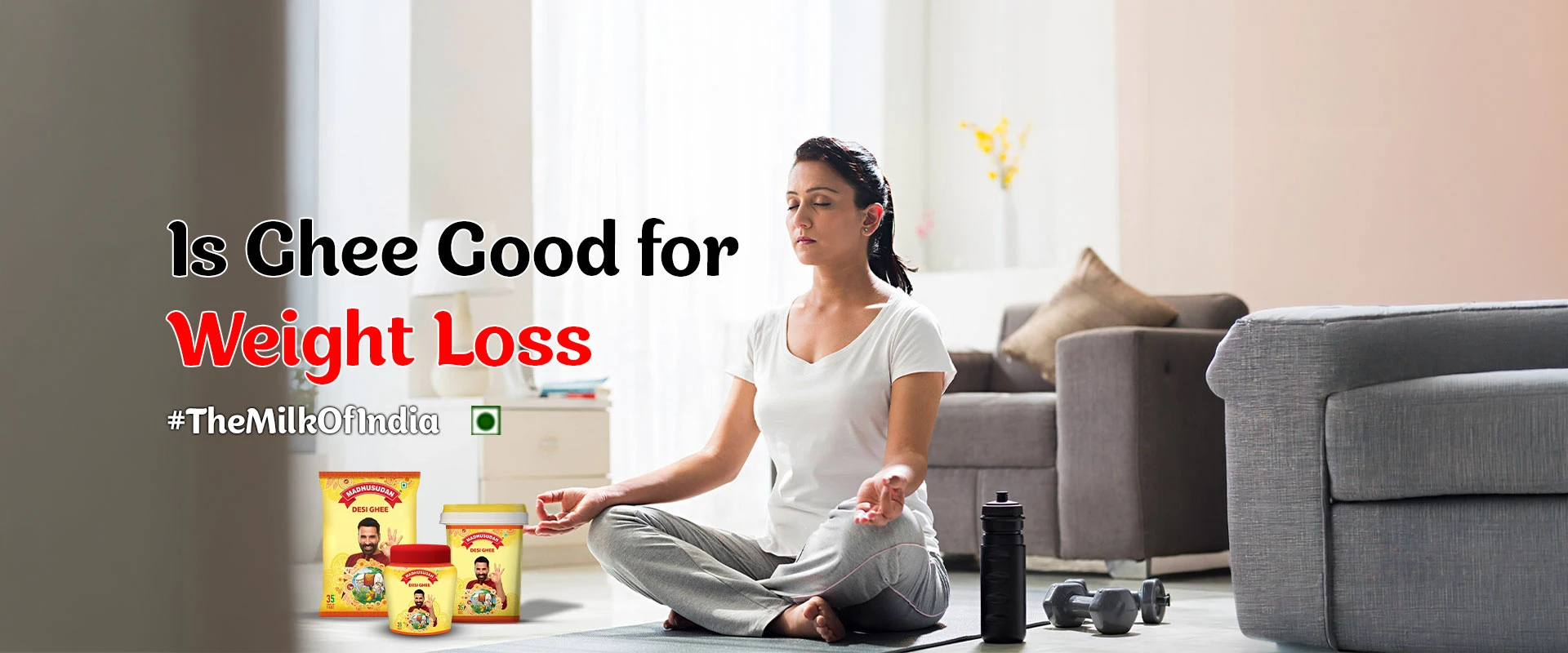

Somewhere along the way, ghee became the first thing people removed when they decided to get serious about their weight. Off the Roti. Out of the Dal. Gone from the kitchen entirely. Refined oils took its place. Low-fat everything became the new normal. And somehow, despite cutting it out, the weight stayed exactly where it was.
Nobody stopped to ask the obvious question. What if removing ghee was never the solution in the first place?
Ghee and weight loss genuinely can go together. Not as some ancient secret or dramatic fix, just as a simple reality of what pure ghee does inside the body when you use it honestly and in the right amount. At Madhusudan World, we have always believed that real dairy made properly does more for people than they expect. And if that ghee happens to be GC tested and verified for purity, like Madhusudan Desi Ghee, what you are adding to your food is not just flavour. It is nourishment you can actually trust.
What is Actually Inside That Spoon of Ghee
One tablespoon. Around 130 calories. That number is honestly where most people close the conversation before it even begins. But the calories are not really the story here. What comes along with them is.
- ● CLA (Conjugated Linoleic Acid) - something the body produces naturally and one of the reasons ghee does what it does to fat metabolism over time
- ● Butyric acid - feeds the gut lining directly and calms low-grade inflammation from the inside
- ● Vitamins A, D, E and K- fat-soluble, essential and quietly missing from most modern diets
- ● Omega 3 and Omega 9 fatty acids - supporting heart health and metabolism together
- ● Stable natural fats providing steady energy without the blood sugar spikes refined carbs cause
- ● Zero lactose, zero casein - both removed during clarification. Making ghee well tolerated even by people sensitive to dairy
Pure ghee has a smoke point of around 250 degrees Celsius. Unlike many refined oils that break down under cooking heat and release inflammatory compounds. Ghee cooks cleanly and gets on with it.
How Ghee Actually Supports Weight Loss
This is not about ghee burning fat dramatically. Anyone claiming that is overselling it. What ghee does is quieter and honestly more useful.
Most people never think about their gut when they are trying to lose weight. But butyric acid in ghee goes right there first. It settles into the gut lining, calms things down and deals with that quiet inflammation sitting underneath that nobody can see but the body definitely feels. And once the gut starts working properly, something shifts. Food gets processed better. Fat gets handled differently. The whole system just runs more smoothly than it does when inflammation is quietly running the show underneath everything.
CLA shifts how the body handles fat consistently across weeks and months of regular use. Not overnight, but steadily and in the right direction.
Then there is satiety. A small amount of ghee with a meal slows digestion just enough that you stay genuinely full, blood sugar stays stable and that mid-afternoon snack urge simply never builds the way it usually does. Weight loss with ghee works through this more practically than any dramatic claim ever could.
How Much Ghee Should You Actually Use
Approx one to two teaspoons a day.
Roughly 5 to 10 grams a day, spread across meals rather than all in one go. That small amount is honestly enough. Enough for the butyric acid to do its thing in the gut, enough to help the body actually absorb the fat-soluble vitamins it needs and enough to make meals feel satisfying without quietly pushing calories over the edge.
Eating ghee for weight loss really comes down to using it in place of the poorer quality fats already in the kitchen, keeping the amount honest and making sure the rest of what is on the plate makes sense too. Used on top of an already heavy diet, calorie density is real regardless of how traditional the source is. It was never ghee or no ghee. It was always how much and in place of what.
Simple Ways to Include Ghee Every Day
Getting ghee into daily meals does not require changing how you cook. It just requires cooking more honestly.
- ● A spoon stirred into hot dal just before serving, oldest habit and still one of the most effective
- ● Used for tempering spices instead of refined oil, the whole dish improves in both flavour and nutrition
- ● A small amount on a fresh hot roti, satisfaction goes up and the urge for a second roti quietly disappears
- ● Half a teaspoon in warm water first thing in the morning for digestion
- ● Mixed into warm rice with rock salt, simple, light and surprisingly filling
- ● For sauteing vegetables instead of processed cooking oils
- ● In homemade sweets where the quality of ghee genuinely changes the outcome
Desi Ghee vs Processed Ghee
This comparison matters more than most people realise.
Desi ghee made traditionally keeps its full fatty acid profile intact, every compound worth having stays exactly where it should be. Processed ghee takes shortcuts during manufacturing that quietly strip away the most valuable parts. The two look similar in the jar but nutritionally they are not the same thing at all.
Madhusudan Desi Ghee is GC tested, meaning its purity is verified through gas chromatography, the most reliable method available for confirming what is actually inside the jar. For a family using ghee daily, that verification is not a detail. It is the whole point.
Common Myths Worth Clearing Up
The biggest myth is that ghee directly causes weight gain. Dietary fat does not automatically become body fat. What you eat across the whole day, how active you are and how your metabolism functions determine that far more than any single ingredient.
Cutting all fat out of the diet does not actually speed anything up. Without fat, hormones start struggling, the fat soluble vitamins sitting in food have no way of getting absorbed and hunger becomes this constant thing that never really settles. Removing fat entirely has a way of creating the exact problems it was supposed to fix.
And more ghee does not mean more benefit. Ghee for weight loss is dose-dependent. The right small daily amount works quietly in your favour. Beyond that it simply adds calories with nothing extra to show for it.
Who Should Be Careful with Ghee
- ● People managing cardiovascular conditions or high cholesterol should consult a doctor before making ghee a daily habit
- ● Those with liver or gallbladder issues may find high-fat foods harder to process
- ● Anyone on a medically supervised low-fat diet should follow that guidance first
- ● Largely sedentary individuals should pair ghee with some daily movement, otherwise the calorie density tips toward gain rather than loss
A Few Simple Tips Before You Start
- ● Measure it properly, one teaspoon means one actual teaspoon
- ● Use it earlier in the day when metabolism runs more actively
- ● Pair with fibre-rich foods like dal and vegetables for the best combined effect
- ● Do not combine with other heavy fats in the same meal
- ● Stay consistent, small daily amounts across months outperform large occasional amounts every time
Should You Eat Ghee for Weight Loss
Yes. With awareness and the right amount, yes.
Ghee for weight loss was never the contradiction it got made out to be. It just got caught in a period when all fat became the enemy and refined oils quietly walked into kitchens that had worked perfectly well for generations without them.
Pure ghee used consistently in small amounts does something no refined oil ever could. It supports the gut, keeps hunger steady, fills in the vitamin gaps that most modern diets quietly carry and gives the kitchen a cleaner, more honest cooking fat than almost anything sitting on a supermarket shelf. The body always knew exactly what to do with good fat. We just stopped trusting it for a while. We just stopped trusting that somewhere along the way.
At Madhusudan, we make ghee the way it has always been made. Purely, honestly and from milk worth trusting. One teaspoon at a time.